About Us — Communication & Media Development Center
Getting to Know Kenwood Media Academy
Vision, mission, and dedication to Indonesian communication — a media education institution under Yayasan Ridho Berdikari, operating through PKBM RIDHO in Bandung.
Introduction
Communication education rooted in integrity
Kenwood Media Academy is a communication and media development center operating under the legal umbrella of Yayasan Ridho Berdikari through the PKBM RIDHO unit. Located in Bandung, we are committed to providing an inclusive educational platform for anyone who wants to delve into the world of broadcasting and public communication.
Our history is rooted in the desire to improve the quality of information interaction in society by producing ethical communicators. We believe that communication education is an individual right to be able to express ideas clearly and responsibly.
Chapter 01 — Foundation
History and institutional foundation
Established as a response to the need for media professionals with integrity, Kenwood Media Academy grew alongside Yayasan Ridho Berdikari. With the official operational permit 421 / 5075 - Disdik / 2023, we carry out educational functions with standards set by the Department of Education.
A strong legal foundation through PKBM RIDHO (NPSN: P2960528) gives participants confidence that the learning process here is administratively recognized. We continue to strive to maintain these standards with transparent and accountable management for all stakeholders.
Each teaching module is designed to meet recognized non-formal education standards, while preparing participants with practical skills relevant to the needs of the media and communication industry in Indonesia.
Institutional Identity
- Affiliation
- Yayasan Ridho Berdikari
- Educational Unit
- PKBM RIDHO (NPSN: P2960528)
- Operational Permit
- 421 / 5075 - Disdik / 2023
- Location
- Paseh District, Bandung Regency, West Java Province
Chapter 02 — Vision
Educating the nation through media
Our main vision is to become a center of excellence in communication education capable of producing graduates with high competency standards. We aspire to an environment where every piece of information conveyed by our graduates becomes a trusted reference for the public.
This is achieved by instilling values of truth, accuracy, and commitment to the public interest. This vision serves as a compass for every academic policy and facility development we carry out continuously.
We believe that a good communicator is not only technically proficient but also understands the social impact of every word conveyed to the public. Therefore, this vision demands a continuous commitment to evaluate and update teaching materials in accordance with the times.
Chapter 03 — Mission
Practical skills development
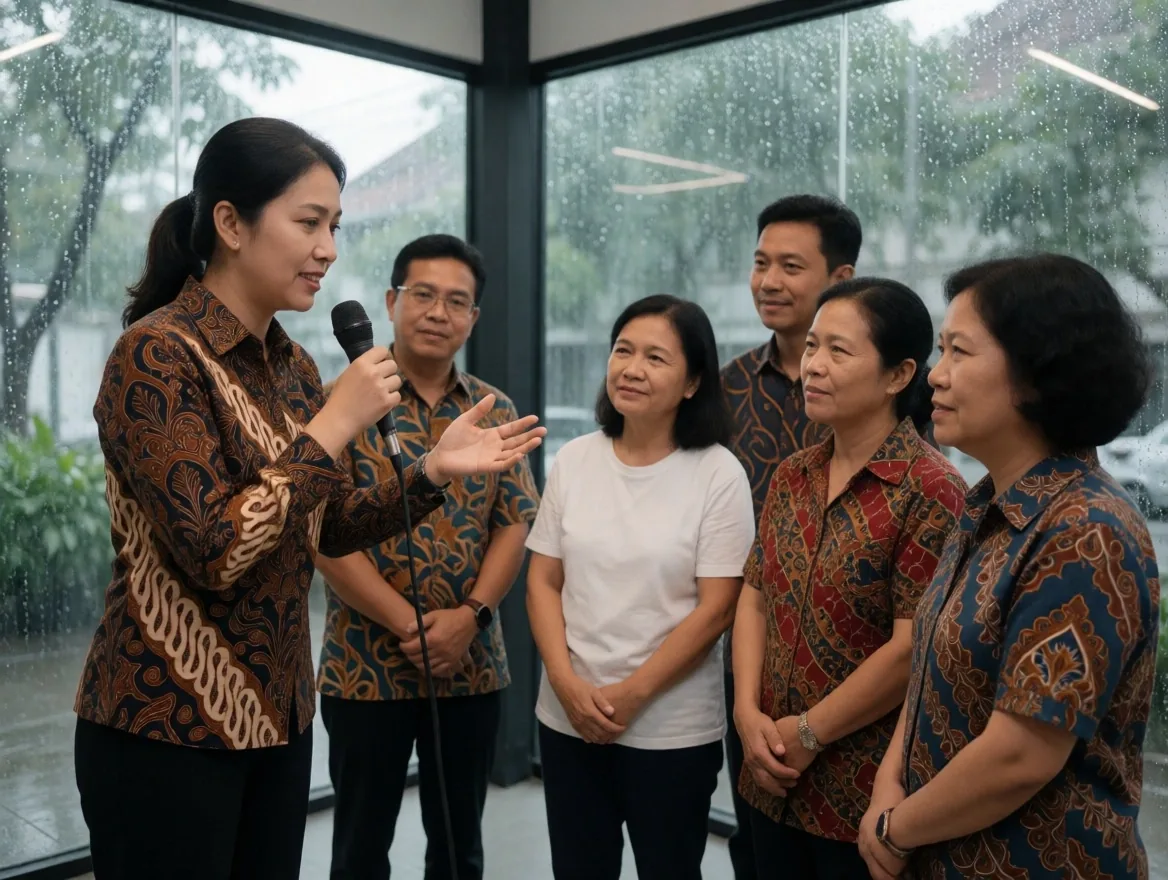
Our mission is focused on organizing training that is applicable and easily understood by various levels of society. We strive to provide a curriculum that is adaptive to technological changes without abandoning fundamental journalistic ethical principles.
In addition, we facilitate the exchange of ideas between senior media practitioners and students to enrich field insights. This mission is realized through the provision of adequate learning facilities and instructors who are competent in their respective fields.
We ensure every participant has the opportunity to practice the theory learned — from interview techniques, argument structures in debates, to the basics of audio-visual content production — so that knowledge does not stop in the classroom.
Chapter 04 — Core Values
Integrity and ethics as the spirit of teaching
Amidst the proliferation of content that ignores moral values, we hold firmly to the principle of integrity as the spirit of every teaching module. We educate participants to always verify every piece of data to be conveyed to the public.
Ethics is not just a theory in our class, but a daily practice that must be reflected in every interaction and work produced. We are confident that ethical communicators will be able to build long-term trust with their audience.
Every participant is encouraged to understand the boundaries of public responsibility — when information needs to be conveyed, when it needs to be withheld for further verification, and how to respect the privacy and dignity of the subjects of news coverage.
Principles We Hold
- ✓ Data verification before disseminating information
- ✓ Separation of facts from opinions in presentation
- ✓ Adherence to the Journalistic Code of Ethics and the ITE Law
- ✓ Respecting the privacy and dignity of subjects
- ✓ Transparency of sources and correction of errors
Chapter 05 — Leadership
Leadership under Yayasan Ridho Berdikari
Yayasan Ridho Berdikari provides full support in the strategic aspects and development of our educational infrastructure. Through socially-visionary leadership, the foundation ensures that education costs remain affordable without compromising the quality of instruction.
The synergy between academy management and the foundation allows for scholarship or subsidy programs for communities in need of access to media education. This is in line with the foundation's social goal of empowering the community through quality non-formal education channels.
The foundation also acts as a governance supervisor, ensuring every program is run according to educational goals and does not deviate from the institution's social mandate. This relationship keeps the academy grounded in its initial goal: opening access to communication education for the wider community.
Chapter 06 — PKBM RIDHO
The role of PKBM RIDHO in media education
As a Community Learning Center (PKBM), PKBM RIDHO serves as an official platform for Kenwood Media Academy to reach a wider audience. We run equality and skills programs that are aligned with national literacy policies.
Our focus on media and communication is an innovative step to provide added value to the traditional PKBM curriculum. Thus, participants not only gain general knowledge but also specialized skills that are ready to be used in the workforce or entrepreneurship.
Chapter 07 — Facilities
Facilities and learning ecosystem
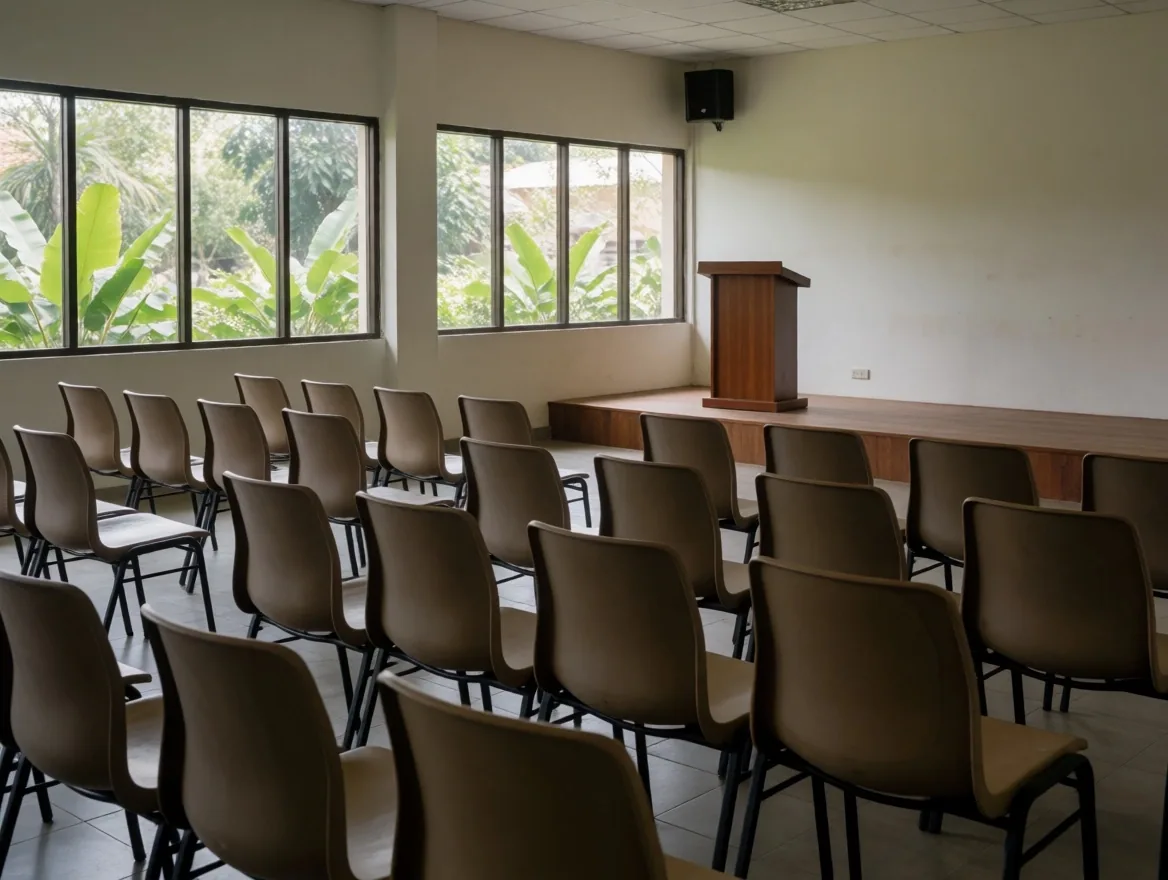
We provide learning spaces designed to support collaboration and creative exploration for all students. Basic audio-visual facilities are provided to give practical experience in broadcasting techniques and digital presentations.
We are also developing a digital library that contains the latest literature on communication theory and mass media development. This ecosystem is created so that every participant feels supported in every step of their learning journey at our academy.
Classrooms are designed for a limited number of participants, so that each individual receives adequate attention and feedback from instructors. We believe that effective learning happens when participants feel known enough to dare to try, make mistakes, and correct them.
Chapter 08 — Instructors
Instructors and educational staff
The instructors at Kenwood Media Academy are selected based on a combination of strong academic backgrounds and practical industry experience. They are practitioners who have long been involved in the world of broadcasting, journalism, and corporate communication.
Their role is not just as material providers, but also as mentors who guide the development of each participant's unique talents. We also regularly hold internal workshops for instructors to ensure teaching methods remain fresh and relevant.
We believe that good teachers must remain learners. Therefore, every instructor is given space to develop themselves, follow industry developments, and bring the latest field experience into the classroom.
Instructor Areas of Expertise
-
●
Broadcasting
Sound engineering, scripting, and audio production
-
●
Journalism
Reporting, interviewing, and news ethics
-
●
Corporate Communication
Public speaking, presentation, and crisis management
-
●
Debate & Negotiation
Structured argumentation and discussion mediation
Chapter 09 — Social Responsibility
Contribution to national media literacy
We actively participate in various initiatives to improve media literacy at the community and national levels. Through free seminars and digital campaigns, we spread awareness about the importance of filtering information in the social media era.
This contribution is a form of our social responsibility as an educational institution that cares about the health of the information climate in Indonesia. We invite various parties to collaborate on educational projects aimed at fighting the spread of hoaxes and hate speech.
We believe that media literacy is not the task of one institution alone, but a collective effort involving schools, communities, and families. Therefore, we are open to partnering with anyone who shares the same concern.
Chapter 10 — Future Direction
Future development plans
Kenwood Media Academy continues to innovate to develop new modules that cover future technology trends such as artificial intelligence in communication. We plan to expand the reach of our education through more sophisticated digital platforms so that it can be accessed by people in remote parts of Indonesia.
Improving the quality of physical and digital facilities remains a top priority in our annual development budget. We are committed to remaining a pioneer in adaptive and high-quality non-formal communication education.
We realize that the media world changes faster than any curriculum. Therefore, our approach is to build a foundation of ethics and basic skills that do not become obsolete quickly, while preparing space for new knowledge that will continue to grow.
Continue
Learn about our programs or contact the academy team
If you want to know about the organizational structure, complete curriculum, or discuss registration directly, we are ready to help you find the right path.